The After-Dinner Mile: the 15-Minute Habit That Fixes Evenings
Quick Answer: The after-dinner mile is the highest-leverage walking slot of the day: 10-15 minutes of easy walking right after eating measurably blunts the post-meal blood sugar spike, aids digestion, and swaps the evening couch-collapse for a wind-down ritual. It needs no gear, no sweat, no motivation speech — just shoes and a door.
The mile you keep meaning to walk ‘sometime’ has an optimal time slot, and it’s the 30 minutes after dinner — the window where an easy walk does more metabolic work per minute than a much harder effort does at other hours.

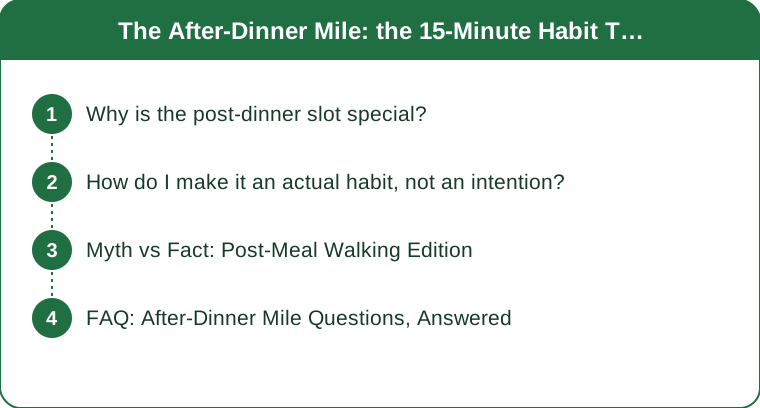
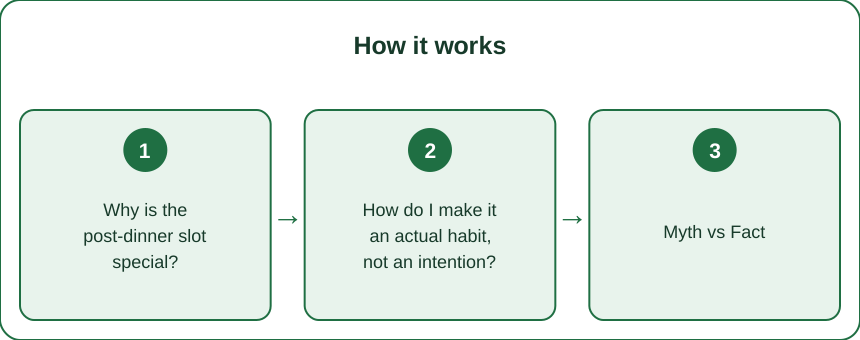
Why is the post-dinner slot special?
Because of what’s happening in your blood right then. After a meal — especially dinner, typically the day’s largest — glucose from food floods in, and your body has two disposal routes: insulin-managed storage, or direct uptake by working muscles.
Walking activates the second route at exactly the right moment: studies show light walking begun within 30 minutes of eating meaningfully reduces the post-meal glucose spike compared to sitting — with even 10-15 minutes producing measurable effects. Your leg muscles literally pull sugar out of circulation to fuel the steps, no intensity required.
Stack the practical wins: digestion gets gentle mechanical help (less bloat, less reflux-prone lounging), the evening gets a natural transition ritual, and the walk happens at the hour when ‘I’ll exercise later’ has finally run out of laters. Easy beats optimal-but-skipped, and this slot makes easy automatic.
How do I make it an actual habit, not an intention?
The after-dinner mile has a secret habit advantage: dinner is the most reliable anchor in your day — it happens daily, at a similar time, and ends with a natural ‘what now?’ moment. Attach the walk there and the schedule maintains itself:
- The rule: last bite → shoes → door, within 15 minutes. The gap between table and couch is the decision point; once seated, the evening’s gravitational field wins.
- Make it stupidly easy: shoes by the door, route pre-decided (one loop, ~1 mile, 15-20 minutes at strolling pace). Zero decisions at walk time.
- Recruit the household: the after-dinner walk is the rare exercise that works better with company — it’s conversation-pace by design, and a walking partner turns the habit into an appointment.
- Weather-proof the fallback: the deal is ‘a mile outside, or 10 minutes of moving inside’ (stairs, hallway laps, tidy-walking). The fallback protects the streak, and the streak is the habit.
- Track days, not distance: a calendar chain of walked evenings builds the identity; the mile is just the unit.

Myth vs Fact: Post-Meal Walking Edition
Myth: Walking right after eating causes cramps and bad digestion. Fact: That caution belongs to vigorous exercise, which diverts blood from digestion. Easy walking does the opposite — gentle movement aids stomach emptying and is a traditional digestion practice in half the world’s cultures for a reason. Strolling pace is the design spec, not a compromise.
Myth: A mile is too little to matter. Fact: For the glucose-blunting effect, timing beats distance — 15 post-meal minutes outperforms a longer walk hours later on that metric. And 7 easy miles a week from a habit that actually happens beats the 20-mile week that exists only in January.
Myth: It has to be brisk to count. Fact: The muscle-uptake mechanism runs at any walking pace. Brisk adds cardio benefits on top, but the evening version’s genius is that it demands nothing — you can do it in dinner clothes, mid-conversation, at grandma pace, and the metabolic work still happens.
For people managing diagnosed blood sugar conditions: the walk is a great adjunct, not a treatment plan — that’s professional territory. This is general information, not medical advice.
FAQ: After-Dinner Mile Questions, Answered
How soon after eating should I start?
Within 30 minutes captures the glucose-timing benefit — the practical version is ‘shoes on within 15.’ No need to leap up mid-dessert; clearing the table counts as the warm-up.
Does it help with sleep too?
Generally yes — light evening activity plus the outdoor light-and-air transition tends to support winding down, and it displaces the doomscroll slot. Keep it easy; it’s a wind-down, not a workout.
What if dinner is at 9pm some nights?
The habit flexes: late dinner = shorter loop (even 10 minutes keeps the chain and most of the glucose effect). The anchor is ‘after dinner,’ whenever dinner is — that portability is why this habit survives real life.
TL;DR:
- The 30 minutes after dinner is walking’s highest-leverage slot: muscles pull glucose directly, blunting the spike — at strolling pace
- Anchor: last bite → shoes → door within 15 minutes; pre-decided loop; company welcome
- Timing beats distance and pace — 15 easy minutes now outperforms harder efforts later on this metric
- Protect the streak with an indoor fallback; track days, not miles
The couch will still be there in 20 minutes — and you’ll land on it digesting better, sugar steadier, evening already won. This is general information, not medical advice.
See It in Motion
Seen here: High Waist Yoga Leggings with Side Pockets — shop it on bubblelime.com
Keep Reading
This article is for general informational and styling purposes only. Fit, sizing, and product availability may vary.