Why Your Mile Gets Slower the Week You Start Tracking It
Quick Answer: Three things happen at once when you start tracking. GPS adds distance through positional drift, so your real pace looks slower. Watching a live pace figure changes your gait and makes you start too fast. And you are now comparing a measured mile against an estimated one that was probably never a mile. The numbers usually settle within two weeks, and the fix is to stop looking at pace mid-effort.
You have been doing the daily mile for a month and it has been going well. So you start recording it properly, and the first week of real data is disappointing — slower than you thought, and slower on day four than on day one.
The habit did not break. You just started measuring, and measurement changes both the thing being measured and what you are comparing it against.
Is the GPS actually accurate over a mile?
Accurate enough for trends, and consistently biased in one direction over short distances.
Consumer GPS positioning has an error of a few metres, and the receiver samples your position every second or so. Each sample carries a small positional error, and the errors do not cancel out — they accumulate as extra distance. The device connects noisy points with straight lines, and a noisy path is always longer than a smooth one.
Typical effect: 1 to 3 percent of added distance in open conditions, considerably more where the signal is degraded.
What makes it worse:
- Tree cover. Signals reflect off canopy and trunks. A wooded path in full leaf can add noticeably more than an open one — and this changes seasonally, which is genuinely confusing in autumn.
- Buildings. Urban canyons produce reflected signals and the largest errors of all.
- Slow speeds. At walking pace, positional noise is a larger fraction of the actual movement between samples. Tracking is meaningfully less accurate for walkers than for runners, which is rarely mentioned.
- The first minute. Satellite lock stabilises over the opening seconds, and the start of a track is usually its worst section.
A 2 percent over-measure on a mile is about 30 metres. At walking pace that is roughly 20 seconds of apparent pace — enough to look like a real decline.
Why does watching the pace figure make it worse?
Because live pace on a watch is a lagging, unstable number, and reacting to it produces exactly the wrong behaviour.
Live pace is computed from a short recent window, so it swings considerably. A slight uphill, a turn, or a moment of signal noise moves it by a large amount within a few seconds.
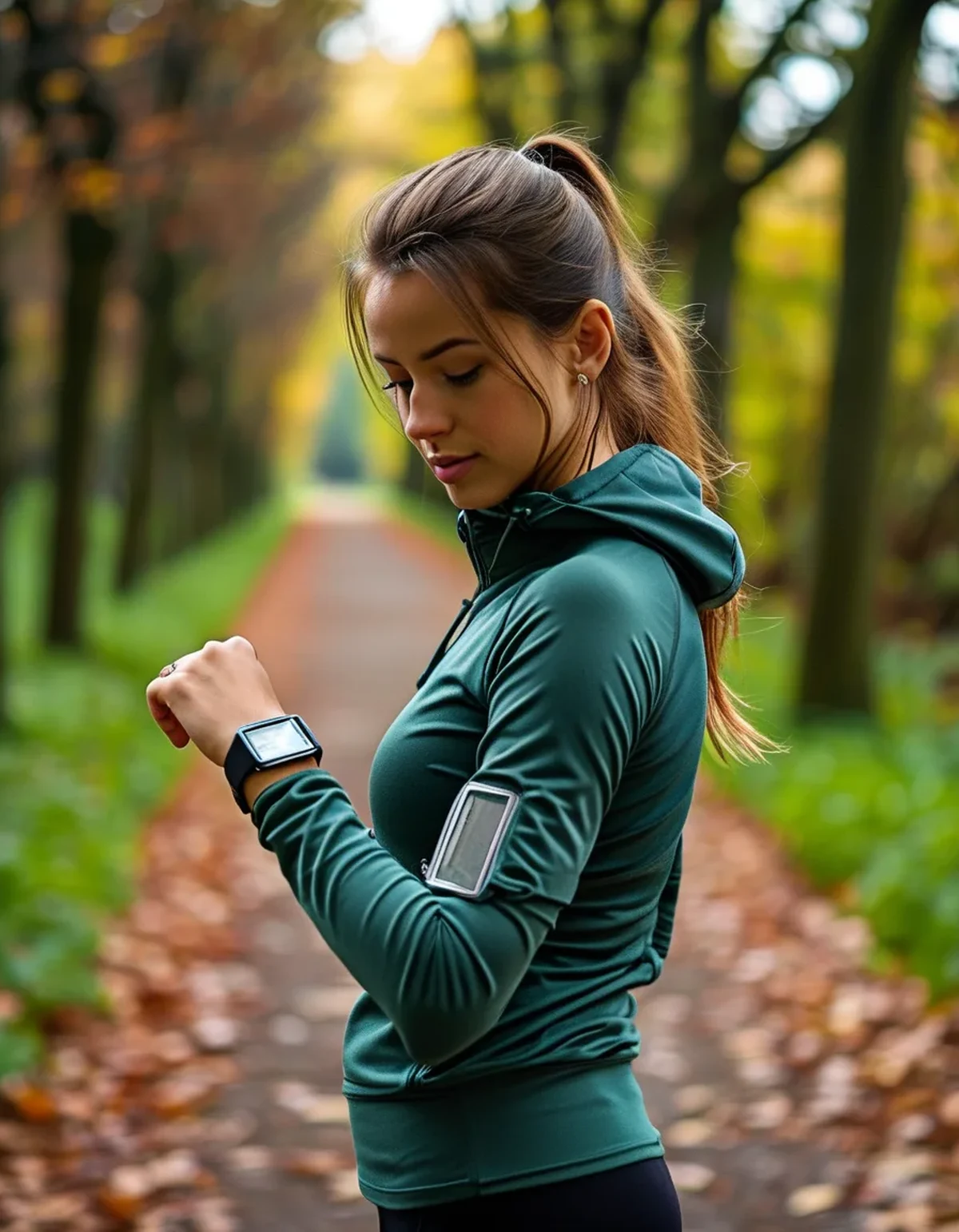
What people do with that number is consistent: they see a slower figure than expected and speed up. They then see a faster figure and ease off. The result is an oscillating effort that is more tiring and slower overall than a steady one.
The start is where the damage is done. Looking at pace in the first two minutes almost always produces an acceleration, because early pace readings are noisy and usually pessimistic. Starting a mile too fast costs more time in the second half than it gains in the first — this is true for runners and, less obviously, for walkers too.
There is a subtler effect as well. Attention on a number is attention off your gait. People reliably shorten their stride slightly when reading a watch, and a shortened stride at the same cadence is a slower pace. The act of checking is itself a small slowdown.
Myth vs Fact: What the Numbers Mean
Myth: my untracked miles were faster. Fact: they were probably not a mile. Routes estimated from memory, from a map, or from a car odometer are usually generous. You are comparing a measured mile against something shorter.
Myth: a more expensive watch would be accurate. Fact: better antennas and multi-band receivers reduce noise but do not eliminate it, and the walking-speed problem affects all of them. Consistency matters more than accuracy for tracking your own progress.
Myth: the treadmill number is the honest one. Fact: treadmill belt speed is calibrated at the factory and drifts with belt wear and load. It is precise but not necessarily correct, and it is not comparable to outdoor pace anyway because there is no air resistance and no true gradient.
Myth: if the numbers are not improving, the habit is not working. Fact: a daily mile delivers most of its benefit through consistency rather than pace. Mood, blood sugar response, and sleep quality all shift long before pace does, and none of them appear on the watch.

What should you actually do with the data?
Use it for trends over weeks, and hide it during the effort.
Turn off the live pace screen. Set the watch to show time and distance only, or nothing at all. This single change is worth more than any other adjustment, because it removes the mid-effort reaction loop entirely.
Use one fixed route as your reference. Same route, same direction, same rough time of day. GPS error on a given route is fairly consistent, so even a slightly wrong distance gives you a valid comparison against itself. A repeatable wrong number is more useful than a variable right one.
Compare weekly averages, not individual days. Day-to-day variation from sleep, temperature, and surface easily exceeds any real fitness change. A weekly mean of five or six miles is a signal; a single Tuesday is noise.
Give it two weeks before drawing conclusions. The first week of any new tracking regime contains the start-too-fast effect, unfamiliarity with the watch, and the novelty of the measurement itself.
Track something other than pace as the primary metric. For a daily mile habit, days completed per month is the number that actually predicts whether you will still be doing it in six months. Pace is a secondary readout at best.
When would a slower mile be real?
There are genuine causes, and they have a different signature from measurement artefacts.
Measurement artefacts appear immediately when you start tracking, are inconsistent day to day, and vary by route and conditions.
Real declines develop gradually over two to three weeks, appear on your reference route in consistent conditions, and usually come with other signs: heavier legs in the first five minutes, higher heart rate at the same pace, worse sleep.
Common real causes in autumn specifically:
- Cooler air on the first cold mornings, which genuinely slows walking pace until you adapt over a week or two
- Fewer daylight hours, which shifts the mile to a darker, slower-feeling time of day
- Accumulated fatigue if the daily mile has been added on top of other training
- Poorer sleep as schedules tighten in September
The clean test: do one mile at deliberately conversational effort and check heart rate rather than pace. If heart rate at that effort is where it usually is, nothing has been lost, whatever the pace column says.
This is general information, not medical advice.
FAQ: Tracking Questions, Answered
Should I calibrate my watch on a track?
If your watch supports it, yes — a 400m track lap gives it a reference for stride length and improves accuracy, particularly at walking speeds. It will not fix GPS drift, but it improves the fallback estimate the watch uses when the signal is poor.
Why is my distance different from my friend’s on the same walk?
Different devices, different sampling rates, and different smoothing algorithms, all applied to independently noisy data. A 2 to 4 percent difference between two watches on the same route is entirely normal and neither is wrong.
Is it worth tracking at all for a daily mile?
Yes, but for adherence rather than performance. Seeing a month of completed days is a genuinely effective habit support. Watching pace on a walk you do for mood and consistency mostly adds a way to feel bad about something that was working fine.
TL;DR: The mile did not get slower. The measurement arrived.
- GPS adds 1 to 3 percent of distance through positional noise, and more under trees, near buildings, and at walking speed.
- Watching live pace makes you start too fast, oscillate, and shorten your stride.
- Your untracked miles were almost certainly not a full mile.
- Turn off the live pace screen, use one fixed reference route, and compare weekly averages.
- For a daily mile habit, days completed is the metric that predicts whether it survives.
Give any new tracking setup two weeks before you believe a single number it tells you.
See It in Motion
Seen here: High Waist Jogger Sweatpants with Pockets — shop it on bubblelime.com
Keep Reading
This article is for general informational and styling purposes only. Fit, sizing, and product availability may vary.