Why a One-Mile Cooldown Changes How an Entire Hard Workout Day Feels
Quick Answer: A one-mile cooldown gradually lowers heart rate and helps clear metabolic byproducts from intense effort, which reduces next-day soreness and stabilizes mood more than stopping abruptly. Skipping it doesn’t ruin a workout, but it noticeably changes how the rest of the day feels.
Stopping a hard workout cold feels efficient in the moment. The easy mile afterward is doing more than it gets credit for.

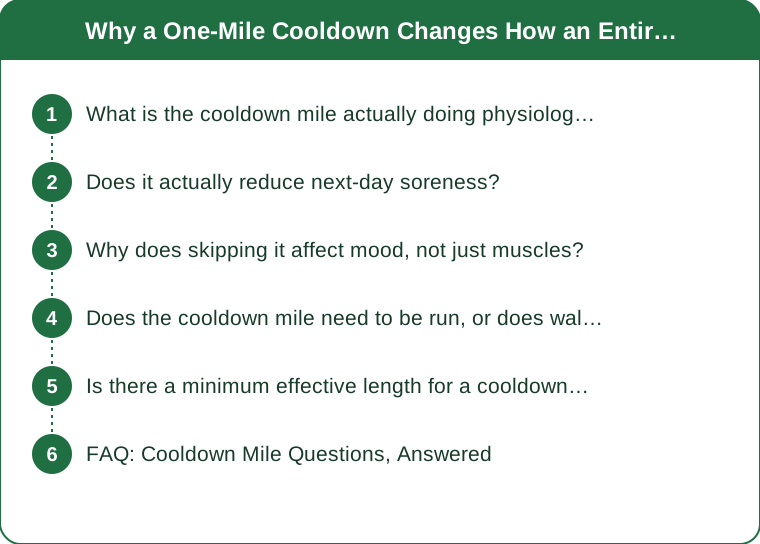
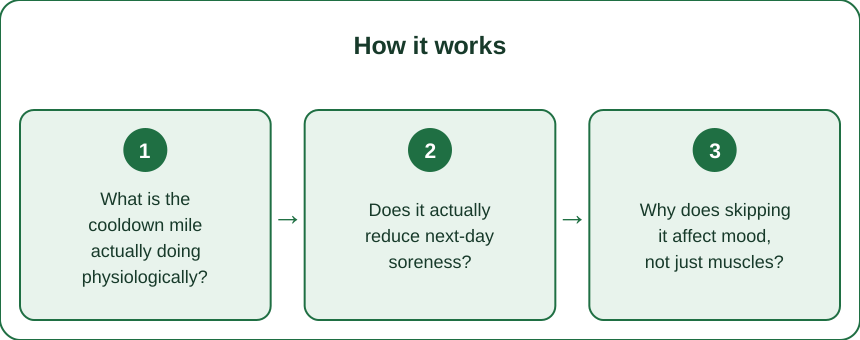
What is the cooldown mile actually doing physiologically?
A slow-paced mile after intense effort gradually lowers heart rate and blood pressure rather than dropping abruptly, which helps blood continue circulating actively rather than pooling in the legs — a smoother transition than an abrupt stop.
Does it actually reduce next-day soreness?
Modestly, yes — the continued light movement supports circulation that helps clear some metabolic byproducts from intense effort faster than immediate rest would, which several people report translating into noticeably less stiffness the following day, though individual response varies.
Why does skipping it affect mood, not just muscles?
Abruptly stopping intense exercise causes a sharper drop in circulating endorphins and adrenaline compared to a gradual wind-down, which some people experience as a rougher emotional ‘crash’ later in the day compared to workouts that end with an easing-out period.

Does the cooldown mile need to be run, or does walking work just as well?
Walking works just as well, and for many people works better, since the goal is gradual heart rate reduction, not additional training stress — a brisk walk accomplishes the physiological goal without adding further fatigue.
Is there a minimum effective length for a cooldown to matter?
A full mile isn’t a strict requirement — even 5-10 minutes of easy movement captures most of the benefit, though a full mile provides a clear, consistent habit marker that’s easy to remember to include after any hard session.
FAQ: Cooldown Mile Questions, Answered
Does a cooldown mile replace the need for stretching afterward?
No — they serve different purposes; the cooldown addresses heart rate and circulation, while stretching addresses muscle length and flexibility, and both have a place post-workout.
Is a cooldown mile necessary after every type of workout, or just intense ones?
It matters most after genuinely intense efforts (hard runs, high-intensity intervals); a light easy-paced workout doesn’t need the same gradual wind-down.
Can a cooldown mile be done on a treadmill indoors just as effectively?
Yes — the physiological benefit comes from the gradual heart rate reduction, which works the same whether outdoors or on a treadmill.
TL;DR:
- A cooldown mile gradually lowers heart rate rather than stopping abruptly
- It supports circulation that may reduce next-day soreness for many people
- Skipping it can contribute to a sharper post-workout mood dip from the abrupt endorphin drop
- Walking accomplishes the same physiological goal as a slow jog
Next hard workout, don’t skip the easy mile after — even a brisk 10-minute walk captures most of what it’s doing for your recovery and mood.
See It in Motion
Seen here: Super High Waist Embossed Yoga Leggings with Inner Pocket — shop it on bubblelime.com
Keep Reading
This article is for general informational and styling purposes only. Fit, sizing, and product availability may vary.