Is a One-Mile Walk Actually Worth It? Here's What It Really Does for Your Body
Quick Answer: Yes — a consistent one-mile walk (about 15-20 minutes) meaningfully improves blood sugar regulation, mood, and daily step count, and its biggest advantage is that it’s easy enough to actually happen every day, which matters more than intensity for most health outcomes.
A mile feels almost too small to bother logging. But the honest comparison isn’t one mile versus a “real” workout — it’s one mile versus the zero miles that happen on the days a bigger workout feels like too much.

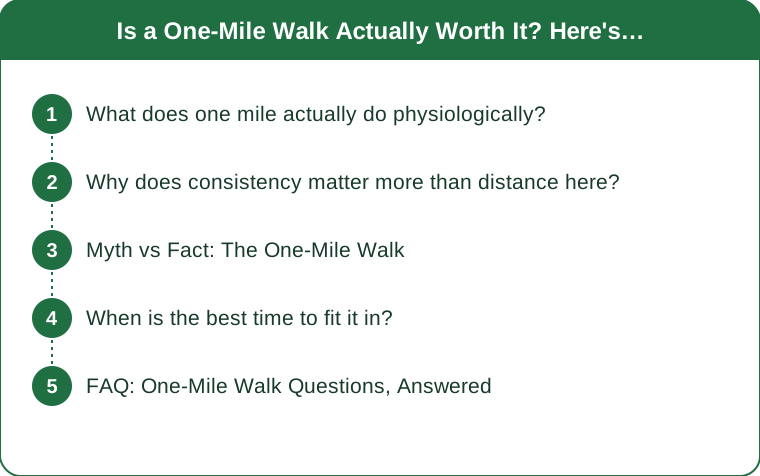
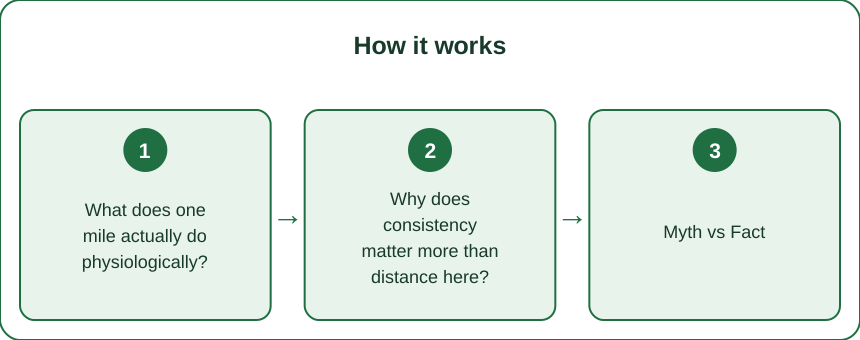
What does one mile actually do physiologically?
A one-mile walk takes roughly 15-20 minutes and burns approximately 80-100 calories depending on pace and body weight — modest on its own, but the more meaningful effect is on post-meal blood sugar: a short walk after eating can measurably blunt the glucose spike compared to sitting.
It also reliably nudges mood via light movement and, if outdoors, natural light exposure — effects that show up even at this short duration, not just in longer sessions.
Why does consistency matter more than distance here?
A one-mile walk that happens every single day delivers more cumulative benefit than a 5-mile walk that happens once a week and then gets skipped for the rest. The habit-forming ease of a short walk is its actual advantage — it rarely feels like “too much to fit in,” which is exactly the excuse that derails longer workout plans.
Over a month, daily one-mile walks add up to roughly 30 miles — a distance that would take real planning to hit any other way.

Myth vs Fact: The One-Mile Walk
Myth: A walk this short doesn’t count as real exercise. Fact: It meets the definition of light-to-moderate activity and contributes to daily movement totals that matter for long-term health, especially for those starting from a sedentary baseline.
Myth: You need to walk fast for it to matter. Fact: Even a leisurely pace delivers blood sugar and mood benefits — speed matters more for cardiovascular conditioning specifically, not for these baseline effects.
Myth: One mile is only useful as a stepping stone to something bigger. Fact: For many people, especially those managing joint issues, chronic fatigue, or simply tight schedules, one mile daily is a legitimate long-term habit, not just a beginner phase.
When is the best time to fit it in?
After a meal (especially dinner) is the single highest-leverage timing, given the blood sugar effect. A morning mile sets a consistent habit anchor and adds natural light exposure that can help regulate sleep timing.
The honest answer: the best time is whichever one you’ll actually repeat daily — a slightly-less-optimal time that becomes a habit beats a theoretically perfect time that gets skipped.
FAQ: One-Mile Walk Questions, Answered
Is walking one mile a day enough for weight loss?
On its own, likely not enough for significant weight loss for most people, but combined with dietary awareness it contributes meaningfully to a calorie deficit and, more reliably, to long-term maintenance.
Should I walk one mile all at once or split it up?
Either works for most benefits — splitting into two half-mile walks (like post-lunch and post-dinner) can actually double the blood sugar benefit versus one longer walk.
Can a one-mile walk replace a structured workout?
Not for building strength or significant cardiovascular capacity, but it’s a legitimate, sustainable baseline that complements or bridges gaps around less consistent structured training.
TL;DR:
- One mile daily meaningfully helps blood sugar regulation and mood, even at a leisurely pace
- Consistency beats distance — daily short walks beat occasional long ones
- Post-meal timing gives the biggest blood-sugar benefit specifically
- It’s a legitimate standalone habit, not just a stepping stone to “real” exercise
See It in Motion
Seen here: High Waist 8” Yoga Shorts — shop similar styles on bubblelime.com
Keep Reading
This article is for general informational and styling purposes only. Fit, sizing, and product availability may vary.