Why the One-Mile Run Is the Best Starting Point Most Beginners Skip
New runners often skip straight to a 5K training plan or interval app, assuming a single mile is too small to bother measuring. In practice, a plain one-mile run is a better calibration point than either of those.

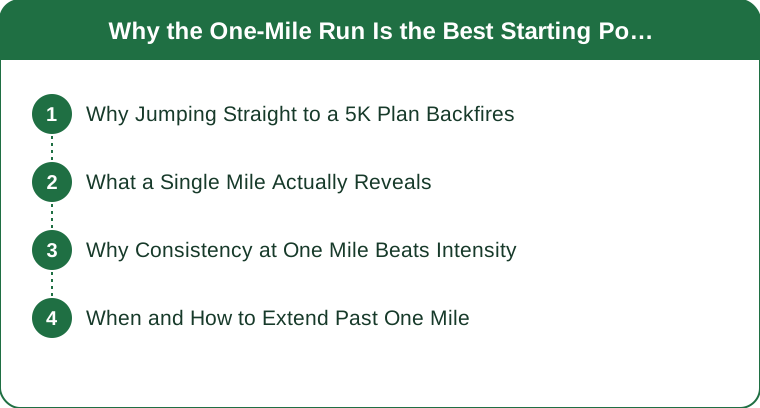
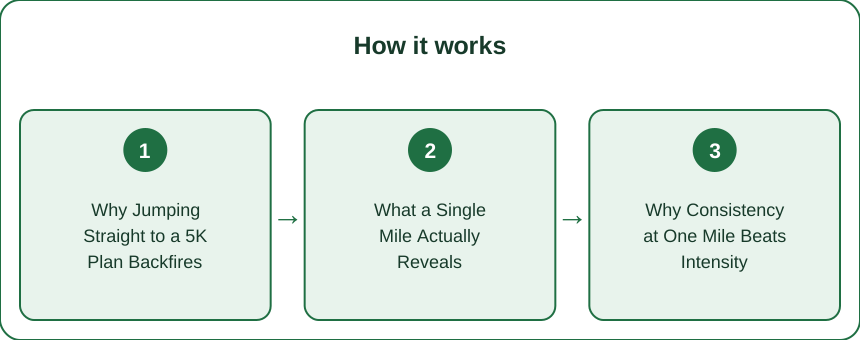
Why Jumping Straight to a 5K Plan Backfires
The mismatch: most 5K beginner plans assuming a baseline running capacity that a true beginner doesn’t have yet, which leads to early walk breaks that feel like failure rather than a normal part of the plan.
What a Single Mile Actually Reveals
The calibration value: a plain one-mile run at a comfortable, conversational pace giving an honest read on current fitness and current mile time, information a longer plan skips past without ever establishing.

Why Consistency at One Mile Beats Intensity
The progression logic: running the same one-mile distance consistently several times a week building an aerobic base and running habit far more reliably than sporadic, harder efforts at a distance the body isn’t ready for yet.
When and How to Extend Past One Mile
The next step: extending distance only once the one-mile run feels genuinely easy at a steady pace, adding distance in small increments rather than doubling it, and the frame (a one-mile run repeated consistently is a more honest and more sustainable starting point for a true beginner than jumping straight into a 5K plan built for a fitness level they don’t have yet.)
New runners often skip straight to a 5K plan or an interval app, assuming a single mile is too small a distance to bother with, but most beginner 5K plans quietly assume a baseline running capacity a true beginner doesn’t actually have yet, which turns early walk breaks into something that feels like failure instead of a normal, expected part of the plan. A plain one-mile run at a comfortable, conversational pace gives an honest read on current fitness that a longer plan skips past entirely, and running that same distance consistently several times a week builds an aerobic base and a running habit far more reliably than sporadic harder efforts at a distance the body isn’t ready for. Extending past a mile only once it genuinely feels easy at a steady pace, and adding distance in small increments rather than doubling it, keeps that consistency from being undone too early.
See It in Motion
Seen here: Super High Waist Embossed Yoga Leggings with Inner Pocket — shop it on bubblelime.com
Keep Reading
This article is for general informational and styling purposes only. Fit, sizing, and product availability may vary.