Making the Mile Automatic (Removing the Decision Entirely)
A mile is an unusually well-sized habit — long enough to matter, short enough that no day is too busy for it, and simple enough that it can become automatic rather than decided. Here is why one mile works as a unit, how to automate it, and how to protect it.

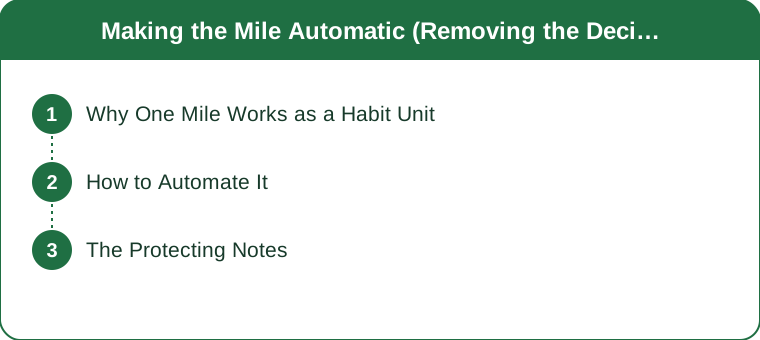
Why One Mile Works as a Habit Unit
Small enough to never skip: the the-it-is-short-enough-for-any-day (the a mile fitting into even the worst schedule from the daily-habit logic — the fits-any-day), the the-it-is-long-enough-to-count (the the distance being meaningful rather than token from the walk-benefits logic — the long-enough-to-count), the the-it-is-a-fixed-unit-not-a-duration (the a set distance being clearer than a time target from the daily-habit logic — the fixed-unit), the the-you-always-know-what-you-are-committing-to (the the commitment being unambiguous from the challenge-guide logic — the unambiguous-commitment), the the-it-can-become-automatic (the small fixed units being the ones that automate from the daily-habit logic — the can-automate), and the reframe (the mile as an unusually well-sized habit unit — short enough that no day is too busy, long enough to matter, and fixed enough to become automatic).

How to Automate It
Removing the decision: the the-the-same-route-every-time (the a fixed route removing route decisions from the daily-habit logic — the same-route), the the-the-same-time-every-day (the a fixed time anchoring it in the day from the daily-habit logic — the same-time), the the-anchor-it-to-an-existing-habit (the attaching it to something already automatic from the daily-habit logic — the anchor-to-existing-habit), the the-lay-out-what-you-need (the removing preparation friction from the wear-guide logic — the remove-preparation-friction), the the-do-it-before-the-day-can-interfere (the earlier placement protecting it from the day from the daily-habit logic — the before-the-day-interferes), the the-do-not-decide-each-day (the the whole point being the absence of a decision from the daily-habit logic — the no-daily-decision), the the-it-does-not-have-to-be-a-workout (the walking counting fully from the walk-benefits logic — the walking-counts), and the the-pair-it-with-something-you-like (the audio or company making it appealing from the walking-meditation logic — the pair-with-something-liked).
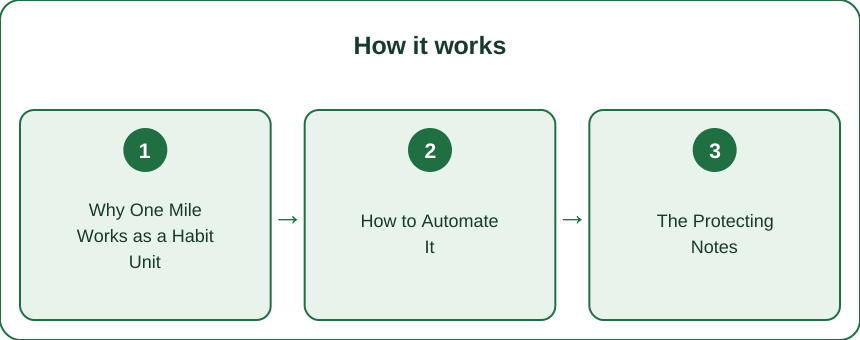
The Protecting Notes
Keeping it alive: the the-never-miss-twice (the resuming immediately after any miss from the challenge-guide logic — the never-miss-twice), the the-do-not-upgrade-it-when-it-goes-well (the the mile staying a mile even on good days from the daily-habit logic — the do-not-upgrade), the the-a-shorter-version-on-bad-days (the permitting a partial version rather than none from the daily-habit logic — the shorter-on-bad-days), the the-weather-is-not-a-reason-to-stop (the planning for weather rather than pausing from the walk-benefits logic — the weather-plan), the the-travel-versions (the a version that works away from home from the daily-habit logic — the travel-version), the the-the-streak-is-the-point (the continuity mattering more than any single mile from the challenge-guide logic — the streak-is-the-point), the the-more-happens-naturally-anyway (the extra distance occurring without being required from the run-beginner logic — the more-happens-naturally), and the frame (the daily mile as a habit unit that removes the decision — same route, same time, anchored to an existing habit, never upgraded and never missed twice. Walk the same route at the same time anchored to an existing habit, never upgrade the commitment, and never miss twice).
A mile is an unusually well-sized habit — long enough to matter, short enough that no day is too busy, and simple enough to become automatic rather than decided. It works as a unit because it is short enough for any day, long enough to count, a fixed unit rather than a duration, unambiguous as a commitment, and able to become automatic. Automate it with the same route every time, the same time every day, anchoring it to an existing habit, laying out what you need, doing it before the day can interfere, not deciding each day, letting walking count, and pairing it with something you like. Protect it by never missing twice, not upgrading it when it goes well, allowing a shorter version on bad days, planning for weather, having a travel version, and treating the streak as the point.
See It in Motion
Seen here: High Waist Yoga Leggings with Side Pockets — shop it on bubblelime.com
Keep Reading
This article is for general informational and styling purposes only. Fit, sizing, and product availability may vary.