Why 'Just One Mile' Backfires When You Use It to Bargain With Yourself
Quick Answer: The one-mile habit is designed as a consistency floor, not a substitute for your real training — using it as a bargain (‘I’ll just do one mile instead of my planned workout’) quietly trains you to treat the minimum as an acceptable replacement rather than a backup. Keeping the two goals separate preserves both the habit and your actual training progress.
You skip your planned strength or run workout and tell yourself the one-mile walk ‘still counts’ — and it does count, just not for the thing you originally planned, and blurring that line is where the habit quietly stops working.

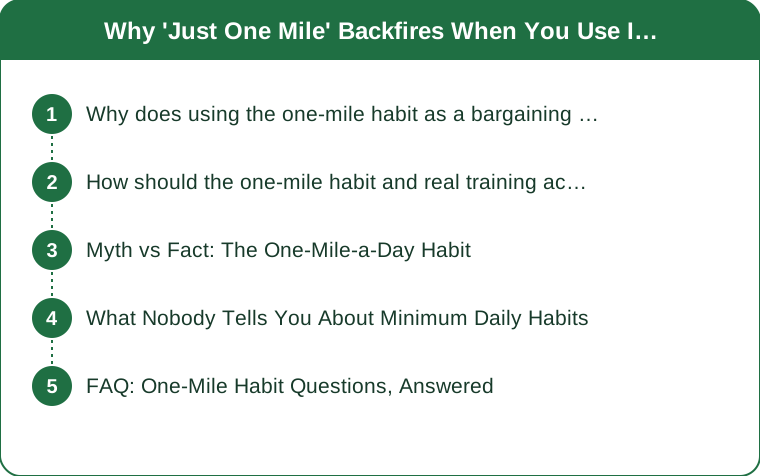
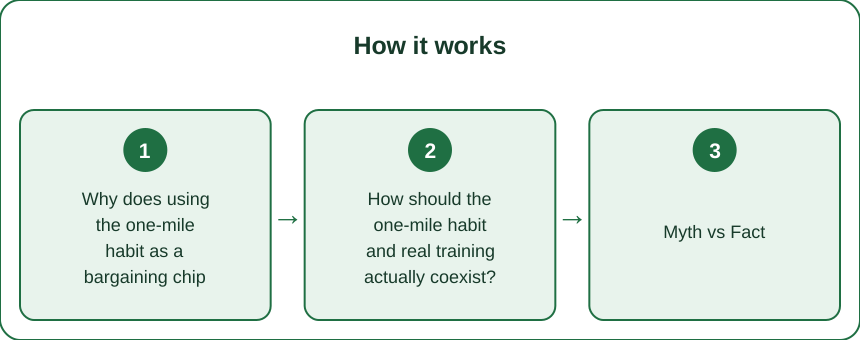
Why does using the one-mile habit as a bargaining chip cause problems?
The one-mile habit’s actual value is as a non-negotiable floor — something you do regardless of motivation, specifically because it’s easy enough to never skip. When you start substituting it for a harder planned workout, you turn a floor into a ceiling, and your brain learns that skipping the real workout has a comfortable, guilt-free replacement.
Over time this erodes commitment to the actual training goal, since the ‘easy out’ is always available and psychologically satisfying enough to reduce the urgency of doing the harder thing.
How should the one-mile habit and real training actually coexist?
Treat them as two separate commitments, not substitutes: the mile happens regardless, every day, no exceptions — it’s not a decision point. Your planned workout is a separate commitment that the mile habit doesn’t replace, even on the days you skip the workout.
This separation actually protects both goals — the mile stays reliably consistent because it’s never up for negotiation, and skipping a real workout stays honestly labeled as a skip, not disguised as ‘still doing something.’

Myth vs Fact: The One-Mile-a-Day Habit
Myth: Any movement is equally good, so substituting the mile for a missed workout is fine. Fact: Different training goals (strength, cardio conditioning, mobility) need their specific stimulus — a mile walk doesn’t replace what a missed strength session was meant to accomplish.
Myth: Using the habit as a backup plan keeps you accountable. Fact: It often does the opposite — it gives your brain a comfortable, guilt-free reason to skip the harder, more important session.
Myth: A daily minimum habit needs to flex based on your schedule that day. Fact: The entire value of a minimum floor comes from it never flexing — consistency, not adaptability, is the point.
What Nobody Tells You About Minimum Daily Habits
The habits that survive years are the ones kept deliberately separate from ‘real’ goals, precisely because they’re never asked to carry the weight of a bigger commitment — the moment a minimum habit starts substituting for something harder, its own reliability usually starts slipping too.
Most people who successfully keep a daily mile habit for years report treating it almost like brushing teeth — a non-decision — while treating actual training as a separate, deliberately scheduled commitment with its own accountability.
FAQ: One-Mile Habit Questions, Answered
Is it ever okay to count the mile as my only activity for the day?
Yes, on genuinely low-capacity days — the issue is specifically using it as an active bargain to avoid a planned harder workout, not occasional rest.
Won’t keeping them separate make me feel like I failed on days I skip my workout?
Honestly labeling a skip as a skip is more useful long-term than disguising it — it keeps your actual training data accurate.
How do I stop myself from using the mile as an excuse?
Schedule your real workouts at a fixed time separate from your mile habit, so the two never compete as a same-moment decision.
TL;DR:
- The one-mile habit works as a consistency floor, not a substitute for planned training
- Using it as a bargain teaches your brain that skipping the real workout has a comfortable replacement
- Keep the two as separate, non-competing commitments
- Honestly labeling a skipped workout as a skip protects your actual training progress long-term
The mile habit stays powerful exactly because it never has to prove it can replace something harder.
See It in Motion
Seen here: High Waist Yoga Leggings with Side Pockets — shop it on bubblelime.com
Keep Reading
This article is for general informational and styling purposes only. Fit, sizing, and product availability may vary.